





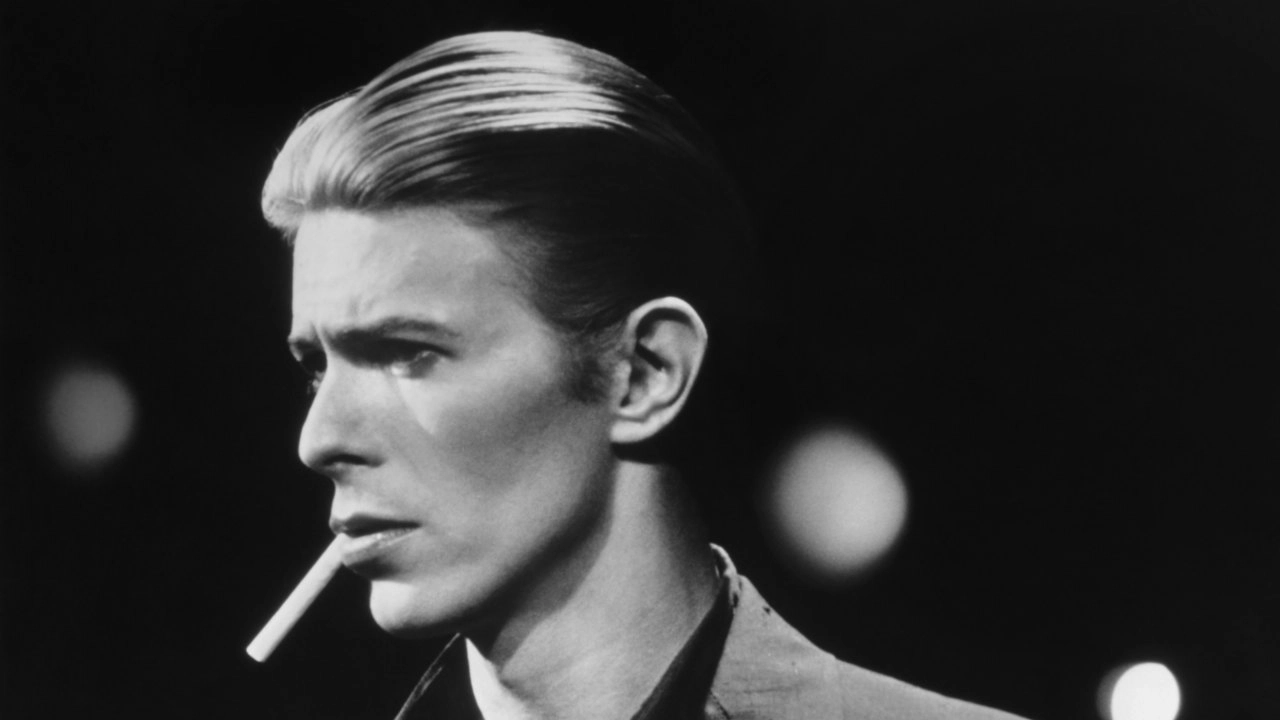
If Lemmy’s wake on Saturday night offered the metal world much-needed catharsis, a renewal of vows and a communal cause for celebration, today it feels like we’ve woken up to find the world has changed once more.
On the surface, Lemmy and David Bowie could hardly have been more different: Lemmy was steadfast, authentic, a man of the people whose uncompromising attitude, self-awareness and conviction was almost within our grasp, if we just tried that little bit harder. David Bowie was mercurial, androgynous, a chameleon, a master of reinvention who glided across numerous music genres, soaked them up and made them alien, futuristic and vivid. He was somehow out of reach but we internalised him anyway. But metal owes its own longevity to this very tension, between the grounded and the innovative, the earthy and the otherworldly, and chances are that if you rifle through the collection of any fellow dedicated metal fan, you’ll find Bowie alongside a host of other artists beyond metal’s immediate borders whose transformative power informed their worldview.
For anyone who grew up feeling alienated, disconnected and out of sync with the world around them, David Bowie embodied that sensation as much as Black Sabbath ever did. From Space Oddity’s untethered Major Tom, though the doomy proto-metal of The Man Who Sold The World – waking up with its hangover from the 60s – through the stranger-in-a-strange-land apocalypticism Ziggy Stardust, Aladdin Sane and Diamond Dogs to the frozen soul of Young Americans, Station To Station’s Thin White Duke putting a stark face on its helpless sense of transition and the exiled cityscapes of Low, Bowie was a medium, co-ordinating and embodying our dislocation. But it was that dislocation that gave him so much musical freedom. Bowie wasn’t so much a mirror reflecting us back, he refracted our gaze, even if we recognised anything of ourselves in him, he opened our eyes to something that was not of this world, not least in the now deeply poignant last Blackstar album.
Of course, David Bowie’s influence can be most obviously be seen in the likes of Marilyn Manson, a figure who in his prime has always seemed to be a ‘cracked actor’ simultaneously in this realm and somewhere other, in the rather more brash interstellar touchdown of Kiss, a generation of gender-playful glam rockers who got their license from the Ziggy era and Perry Farrell’s polymorphous perversity. But elsewhere his influence may have been less direct although it’s still felt to this day. The underground’s current wave of post-punk and goth – Secrets Of The Moon’s new album Sun being a case in point – owes its existence to David Bowie, not least to 1980’s Scary Monsters (And Super Creeps) album, and the potent effect Bowie’s work has had on the likes of Bauhaus and Gary Numan. Misfits’ yearning for a chimerical 50s is reflected in Aladdin Sane and tracks such as Drive-In Saturday. Much of Trent Reznor’s soundtrack work has its DNA spliced from the second half of Low, as has a host of more atmospheric industrial acts across the continent.
But, and we all know this within ourselves, Bowie’s was a sensibility that’s permeated all our consciousness and much of the music we love, that sense of the outsider, the way we conflate the dishevelled (Unwashed And Somewhat Slightly Dazed, ‘Rebel Rebel, you’ve torn your dress’) nature of NWOBHM with black metal’s search for the immaculate and that dedication to your art that keeps you going until the day of your death.
The way we respond to the loss of our heroes often reflects the artists themselves. When we learned of Lemmy’s death, we all came together, drank bourbon, knew what to do with ourselves even when in grief, celebrated, gathered around an idea and a knowledge that was central. Today we’ve woken up in world without David Bowie and it feels unreal, mentally looping back in the vain hope that we can contain that thought. We feel lost, like a strand we always felt was there, consciously or not, is not there anymore, scratching an itch we can’t quite locate. Lemmy might have been earth and fire, Bowie air and water, but what we’ve lost over this past fortnight has been something elemental.

