


Paice Ashton Lord are the neglected branch on the Deep Purple family tree. Not surprising, given that their existence amounted to just one studio album and a handful of live gigs. But it started with the grandest of intentions.
When Purple dissolved in 1976, drummer Ian Paice and keyboard player Jon Lord had two choices: they could start a soundalike band, or they could head off in a different direction entirely. “We thought: ‘If we carry on doing what we’d done before, it’ll be likened to Purple and it’ll never be accepted properly,” says Paice. “So we decided to do something completely different.”
Ditching Purple’s Hammond-driven grandeur, the pair envisaged their new endeavour as a hybrid of the blues groups, jazz outfits and big bands they had grown up listening to. The secret ingredient was singer and keyboard player Tony Ashton.
Ashton was a larger-than-life character who had long been in their orbit. His former band, Ashton, Gardner & Dyke, had shared management with Purple, and he and Lord had made 1974’s First Of The Big Bands album together. “Tony was the life and soul of everybody’s party,“ says Paice. “He did like a drink. But he was a wonderful bloke and never nasty with it.”

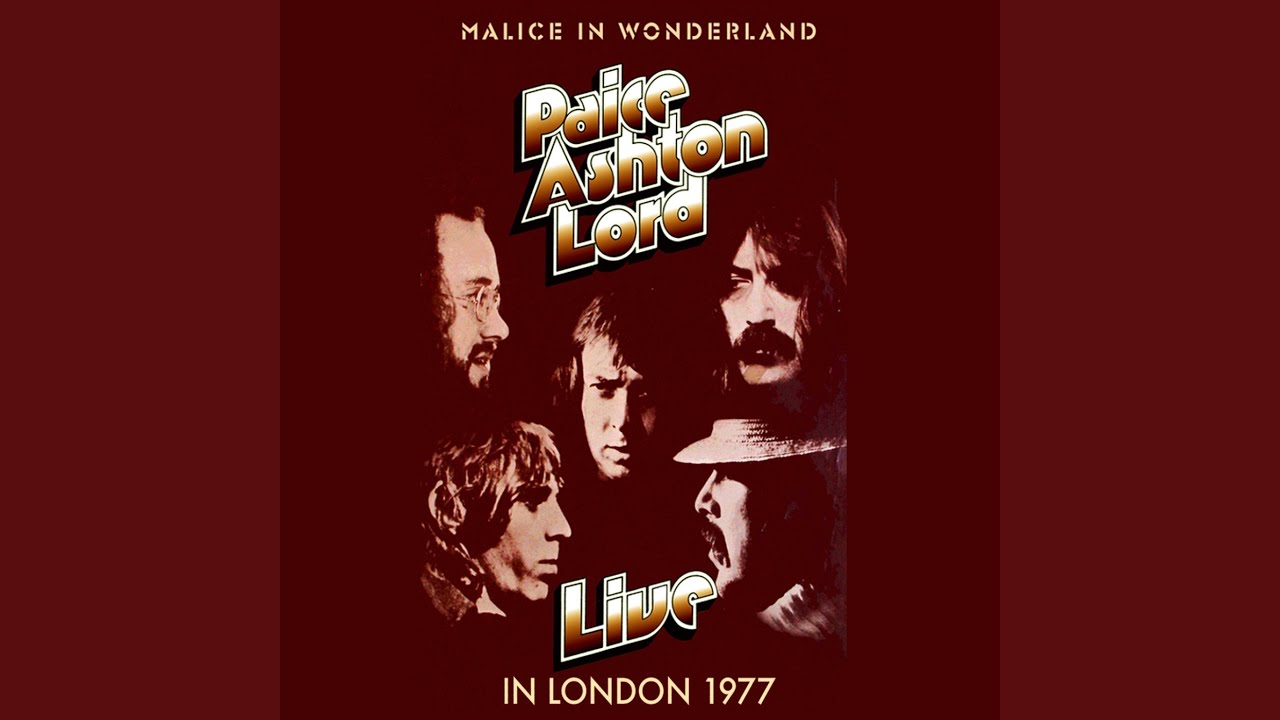
The idea was to build the band around Ashton’s bluesy, showboating voice and rollicking piano, bringing elements of soul and funk into the mix. Bringing in ex-Babe Ruth/future Whitesnake guitarist Bernie Marsden and session bassist Paul Martinez, they recorded their debut album, Malice In Wonderland, released in October 1976.
“That was a lot of fun,” says Paice, “and so we did a few gigs.”
That’s when the problems started. Ashton was the perfect frontman in a small club, but Paice and Lord’s pedigree meant the new band was booked to play bigger stages, something the singer struggled to deal with.
“Tony was only Tony when in a small club, three or four hundred people, when he was really close to them and could communicate with them,” says Paice. “He was magnificent at that. On a big stage he was not a happy camper. Those shows we did were musically fine, but Tony was not in his element.”
In April 1977, Paice Ashton Lord played a show at the fabled Rainbow Theatre in Finsbury Park, North London. What was supposed to be a triumphant night started in disaster when Ashton fell off the stage almost immediately and broke his leg.
Tony was only Tony when he was in a small club, three or four hundred people, when he was really close to them.
Ian Paice
“A light was in the wrong place and he went straight off into the orchestra pit,” says Paice. “We dragged him out and he did the show, but he was obviously not feeling great. But that was nerves, just not wanting to be up there on that big stage.”
The writing was on the wall for PAL by then. The trio began working on a second album, but they knew it wasn’t going to work out.
“Jon and I looked at each other and said: ‘The music’s right, but we’re just throwing good money after bad here,’” says Paice. “What we needed to do was not what Tony was about – we needed him to be Big Stage Tony, and he was always going to be Little Stage Tony.’”
Paice and Lord decided to call time on the band before they finished the second album, and the two of them eventually joined ex-Purple colleague David Coverdale’s Whitesnake. Ashton, meanwhile, began to step back from music, concentrating instead on a parallel career as an artist. In 1999 he was diagnosed with cancer. He died on May 28, 2001, at the age of 55.
“I saw Tony a couple of weeks before he died,” says Paice. “He was very stoic about it. He knew he was going, so he had his gin and tonic by the bed and his TV, and his lovely wife Sandra there looking after him. If there is a way to go, Tony made the best of it.”
Originally published in Classic Rock issue 249 (May 2018)

