


It’s a familiar phenomenon these days: venerable titan whose creative career has gone off the boil, stuck in a relatively comfortable dead-end, past achievements venerated but now taken for granted. Then along comes new management, a new producer, a new record deal, a sprinkle of hot-ticket guest stars… and a whole new body of work emerges, bringing with it a surge of vitality and a new phase of an artistic life that had been considered almost at an end. It happened with John Lee Hooker, with Johnny Cash… hell, it happened with Tom Jones..
But the precedent for this now well‑worn career path was set by Muddy Waters back in 1977. After almost three decades as the defining artist of Chicago’s Chess Records label, the 62-year-old Big Mud had terminated his association with the company – a move as startling as if the Eiffel Tower had declared itself bored with Paris and relocated to Rome. However, Chess was now barely recognisable as its former self: founder Phil Chess was dead, his son Marshall had quit to run the Rolling Stones’ label, the Chicago operation was closed down and the Chess catalogue and logo had been sold to a New York-based conglomerate.

Enter Johnny Winter. Recovered from most of the various bad habits acquired during his years of rock superstardom and recommitted to the blues, he offered to produce Muddy and signed him to Blue Sky, the custom label he ran with his manager Steve Paul. His mission: to cut what he considered to be a real Muddy Waters album, firmly in the tradition of the definitive South Side blues of Muddy’s first two Chess decades.
To this end, he and Muddy assembled an all-star studio crew. From Muddy’s road band came pianist Pinetop Perkins, drummer Willie ‘Big Eyes’ Smith and guitarist ‘Steady Rollin’ Bob Margolin. The harmonica chair went to James Cotton, a Delta/Chicago veteran who’d logged several years in Muddy’s band, as well as leading his own successful groups. Cotton, in turn, brought in his regular bassist: a sparky youngster (comparatively speaking) named Charles Calmese. And, of course, Winter himself would play lead guitar. (As it turned out, he and Margolin played all the guitars on the album; Muddy’s iconic Fender rig – red Telecaster and Super Reverb amp – was always at his elbow in the studio but remained untouched.)

In October 1976 they assembled in The Schoolhouse, Dan ‘Instant Replay’ Hartman’s Connecticut home studio, and started tossing song ideas around. “I had cassette tapes of Muddy’s Chess songs made from my albums,” says Bob Margolin. “I’d bring them to the studio and play them for everyone, and Muddy would decide if he wanted to record a song again.”
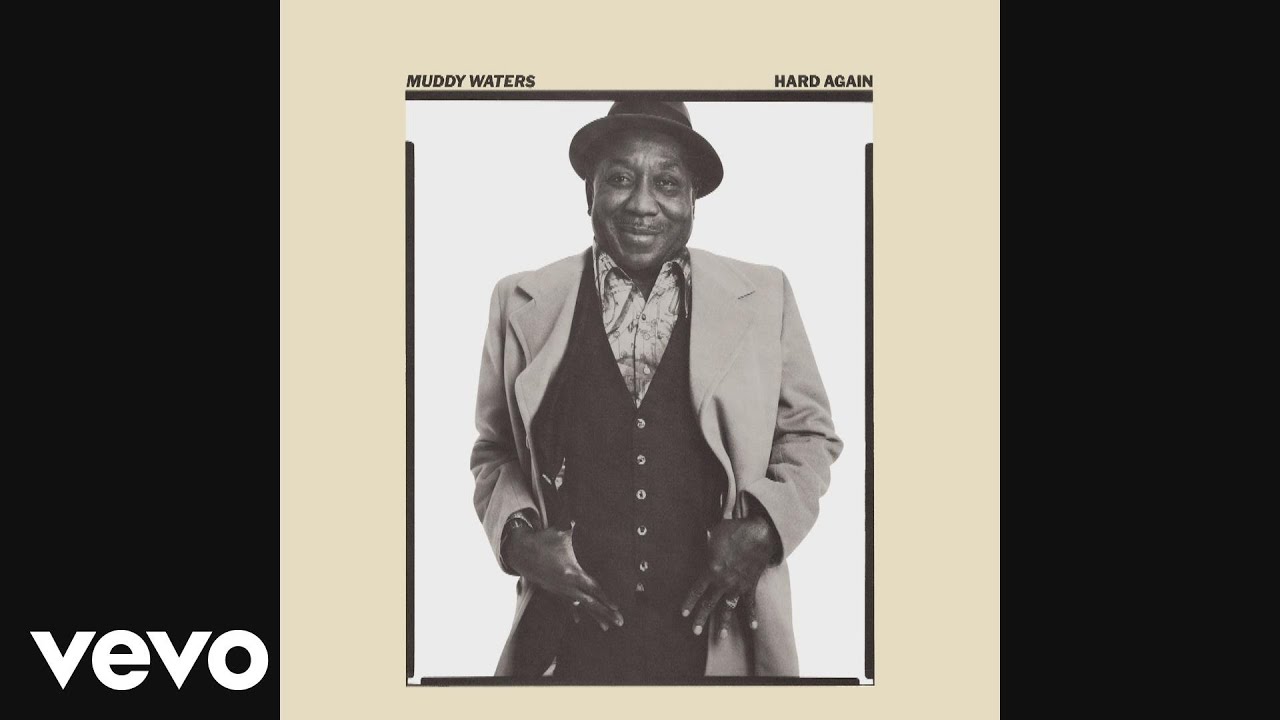
A day of setting up, sound-checking and listening to Margolin’s cassettes was followed by two days of live-in-the-studio recording, and the album eventually known as Hard Again – because, Muddy said, the music they’d cut “made my little pee-pee hard again” – was in the can.
And what an album it was! If you ever want to hear the phrase ‘a giant refreshed’ illustrated definitively, you need go no further. And it began with the most devastating possible way to introduce Muddy to a new audience (or to reintroduce him to a slightly jaded old one): Muddy’s preacherly holler of ‘O-hhhhhh yeah!’ and fervent testifying, enthusiastically egged on by Winter and the congregation, before Willie Smith’s gut-punch bump-and-grind drumming kicks the ensemble into the defiant recasting of Mannish Boy.
Muddy’s rumbustious version of Brownie McGhee’s The Blues Had A Baby And They Named It Rock And Roll similarly entered the canon, and an exquisite version of Muddy’s first-ever Chess hit, 1948’s I Can’t Be Satisfied, found Winter reverently recreating Muddy’s original slide guitar part while the great man vocally revisited his youthful triumph.
Waters sings as though his life depended on it. Johnny Winter proves with every note how right he was to want to do this
Critic Robert Christagu
The reviews were ecstatic. “Waters sings as though his life depended on it,” wrote Robert Christgau. “Johnny Winter proves with every note how right he was to want to do this, and James Cotton – well, James Cotton doesn’t open his mouth except to make room for the harmonica, which sounds just great.”
Another Grammy went onto Muddy’s well-stocked mantelpiece, and in 1977 they went out on tour, Winter fronting the band for the opening set and then stepping back for Muddy to take centre-stage. The shows were absolute stormers – check out the live recordings on Muddy “Mississippi” Waters Live – and Winter was so pumped by the end of the tour that he took the band back into The Schoolhouse to cut his own album, Nothin’ But The Blues, climaxing with a guest lead vocal from Muddy on Walking Through The Park.
Two more studio sequels followed before Muddy’s death in 1983: I’m Ready was a worthy successor following the same format, with the core band augmented by old Chicago colleagues Jimmy Rogers (guitar) and Big Walter Horton (harp), but I’m A King Bee found Muddy’s energies flagging and the sessions padded by out-takes from the earlier records – though it did include one final classic Muddy original, Champagne And Reefer, as performed by Buddy Guy in Martin Scorsese’s recent Stones concert-doc Shine A Light.
Nevertheless, it was Hard Again that proved the Chess sound could outlive the Chess label, that Johnny Winter was the best friend an aged Chicago blues titan could have, and that Muddy himself was… hard again.
Originally published in Classic Rock issue 175
