


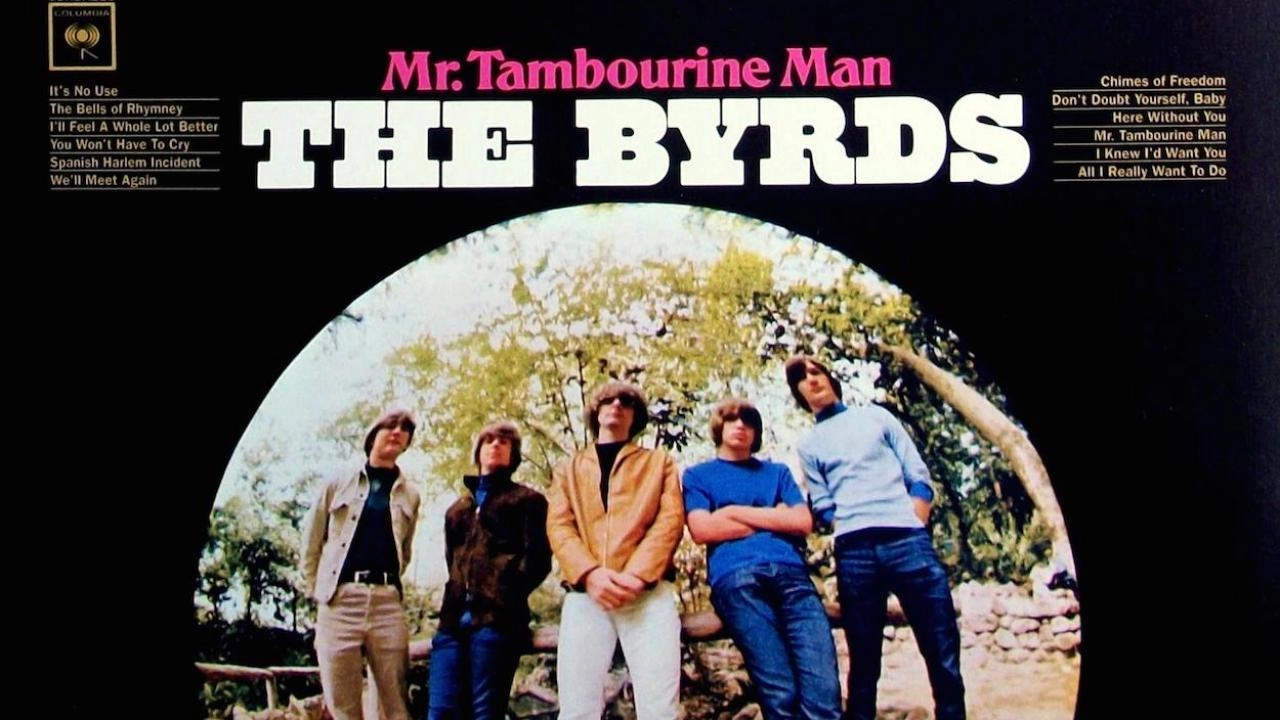
The Byrds - Mr Tambourine Man (Columbia, 1965)
People often take The Byrds to task for nicking Bob Dylan’s music, and transforming his protest songs into pop singles void of the urgency in his originals. This is not only unfair but also uninformed, and here’s why…
Sonically speaking, what The Byrds were doing back in 1965 was truly revolutionary. Inspired by the American folk revival movement of the 1960s (of which Bob Dylan was obviously the chief exponent) and the twelve-string guitar jangle of The Beatles, they were the first band to fuse the two disparate elements together and create a brand new sound: folk rock.
The Byrds may have ‘borrowed’ a large portion of material from Bob Dylan for their debut album Mr. Tambourine Man, but they also exerted a significant influence on him. It’s no coincidence that Dylan’s switch to electric instrumentation occurred after this album’s title track became a top selling single (marking the first occasion one of Dylan’s compositions became an international No. 1 hit) and it also kick-started the sixties folk rock movement in the US, giving rise to the likes of Jefferson Airplane, The Lovin’ Spoonful and Love to name but a few.
Mr. Tambourine Man expanded on the folk rock sound of the lead single and featured three more Dylan re-imaginings, including the follow up single All I Really Want To Do. The Byrds paid further tribute to their folk roots with a cover of Pete Seeger’s The Bells of Rhymney, and they even had a sardonic stab at Vera Lynn’s World War II anthem We’ll Meet Again, in a nod to Stanley Kubrick’s satirical black comedy Dr. Strangelove. But the real revelation of Mr. Tambourine Man was the exceptional songwriting talent of Gene Clark who had a hand in all five of the original compositions on the album, including the archetypal Byrds standard I Feel A Whole Lot Better (later covered by Byrds aficionado Tom Petty).
The Byrds were also massively inspired by the British Invasion bands, and The Beatles in particular. After watching A Hard Day’s Night in 1964 they equipped themselves with similar instruments to The Beatles and began coupling their love of American folk music and the protest laments of Bob Dylan with a twelve-string guitar jangle and pop-dance beat. The forumla proved to be a big success, and Mr. Tambourine Man instantly established The Byrds on both sides of the Atlantic. They also became the first American group to rival the artistic and commercial dominance of The Beatles, and the Fab Four in turn acknowledged the importance of The Byrds by incorporating the riff to The Bells of Rhymney into one of their own compositions (the George Harrison penned If I Needed Someone).
Mr. Tambourine Man is an important step in the evolution of twentieth century rock music and it deserves to be celebrated as such. The unique combination of socially conscious intelligent lyrical content and powerful electric guitar riffs backed by a Bo Diddley beat influenced numerous acts and artists over the years, and the jangly guitar playing and poetic lyrics pioneered by The Byrds can be heard in Big Star, REM, The Smiths, The Stone Roses, Teenage Fanclub, Primal Scream, Beck and more.

