




Of all regions in the UK, Newcastle and the North East arguably had the hottest metal scene of the New Wave Of British Heavy Metal years;
The Tygers Of Pan Tang, Fist, Avenger, Black Rose, Hollow Ground, Battleaxe, White Spirit, Raven and Venom all hailed from the area. Although they emerged at the same time, local boys Satan, like Venom before them, stood out from the pack. Not, however, because of occult trappings or a Luciferian lyrical bent, but rather because their complex, progressive and at times challenging material was so far removed from the typical NWOBHM sound, which was often little more than accelerated pub rock. Although ahead of its time, Satan’s sound was out of step with the scene, and often beyond the grasp of fans weaned on more traditional fare and, crucially, the UK music press.
“Although we were very young,” explains guitarist and co-founder Steve Ramsey, “we were trying to push it and play right on the edge of our ability.”
Formed in 1979 with guitarist and friend Russ Tippins while the pair were still at school, Satan were a band on paper before they became a reality.
“We had a name and even a logo before we had instruments!” laughs Steve.
As was the way back then, they honed their playing by absorbing and aping their heroes; Sabbath, Scorpions, UFO, Thin Lizzy, Rainbow, Rush and Judas Priest. By 1981, having recruited a vocalist, bassist and drummer, also from school ranks, Satan were ready for the studio. The session proved fruitful, producing four songs initially released on cassette, two of which later appeared on the now-legendary Roxcalibur compilation album from 1982, while the others were subsequently pressed up in the form of a self-financed seven-inch single, Kiss Of Death.
Although things were looking bright with a line-up that by this point included future Avenger/Atomkraft frontman Ian Davison Swift – the single was selling well and arousing record company interest – Steve and Russ spotted an opportunity that they simply couldn’t pass up.
“I recall seeing Blitzkrieg at the Mayfair,” explains Steve. “We were massive fans of them and their vocalist, Brian Ross. They’d split up and, although Brian had briefly joined Avenger, he was available. We had a chance to get him and we weren’t going to miss it. Being fans, having him in the band was a really big deal.”
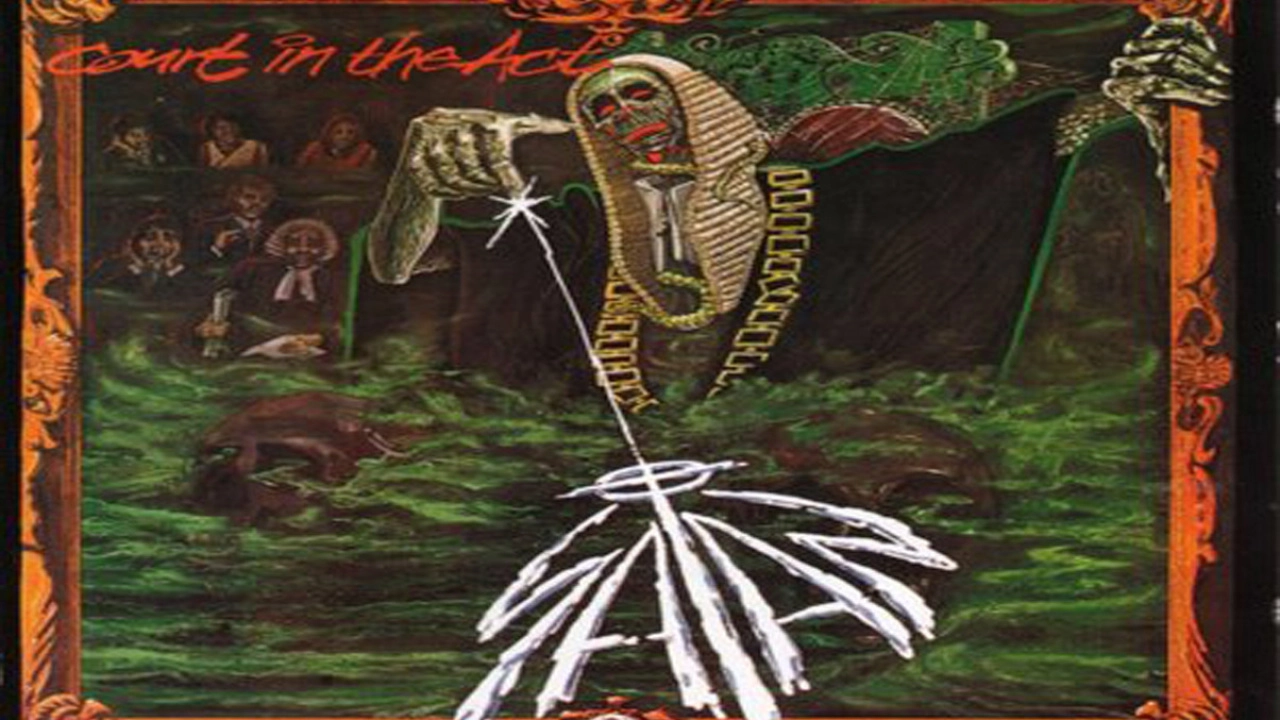
Oddly, although amicably, Ian left Satan to take Brian’s place in Avenger, paving the way for the band to complete work on what would become their debut album, 1983’s Court In The Act. All of the epithets thus far applied to the band’s music – complex, progressive, challenging – applied in spades to the album, going a long way towards explaining why it still stands up today. That it was, however, “difficult to listen to, not just a quick fix”, as Steve puts it, proved a problem for the press.
“We were just pushing it farther than people wanted to hear at the time,” Steve groans. “Stuff like Saxon was big and Priest had started making records to sell records. We just didn’t have that in us at all; we weren’t commercial enough.”
Satan were from being alone as a UK band struggling for support and recognition at home. However, their knee-jerk reaction to an apathetic – even hostile – media drastically altered the course of their career. Ditching both Brian Ross – their onetime star prize – and the name Satan, the band hooked up with frontman Lou Taylor under the banner Blind Fury, releasing one album, Out Of Reach, in 1985. Although
Although a solid album, Out Of Reach was predominantly Lou’s vision for a clean-cut and completely unadventurous commercial entity. The rest of the band soon realised their mistake.
“We thought of the band name when we were just 15,” says Steve, “and we didn’t consider any consequences; it just sounded like a cool metal name. Sabbath weren’t writing songs about slitting virgins’ throats or shit like that, so it should have been OK. But then black metal and death metal started coming out and we were getting associated with it, and it wasn’t what we were about. The very negative press we got in England really knocked us for six, but looking back now it doesn’t make any sense. We should have kept the name, stuck to our guns and done what we wanted to do. A year after we’d made the change, we realised how popular the Satan album had become. But it was too late by then; we’d kinda missed our boat.”
Even if their ship had sailed, the band took the risky decision to revert to the Satan moniker in an attempt to salvage what was left of their career. Having hired new vocalist Michael Jackson, they immediately began writing and recording, releasing the Suspended_ Sentence_ in 1987.
Satan were far from being alone as a UK band struggling for support and
recognition at home. However, their
“We stripped it all right down and went back to what we believed in,” explains Steve. “Those are my favourites from all the things we did, and they were really good times, too.”
Although still woefully under-appreciated domestically, the band enjoyed some high profile patronage from a certain Messrs Hetfield and Ulrich.
“We were mates with James and Lars,” Steve recalls. “They came to our ‘Satan Comes To London’ party and they liked to hang out. They were big fans. We never understood why we were the only band they really liked that they never did a cover of! Maybe the material was a bit tricky for them. Or maybe we’re just cursed!”
Come 1988, it was certainly beginning to look that way. The band name had become an issue yet again and, in the teeth of the twin onslaught from the then-dominant trends of thrash and glam, Satan seemed lost.
“Black metal kept getting bigger,” says Steve, “and people had started burning churches down. We had people trying to stop us playing and Christian protesters turning up at shows. We explained to people that we had nothing to do with occultism or devil-worshipping, but we just got tired of it.”
Revamping themselves as Pariah, the band soldiered on for several years before finally splitting, with Steve going on to start Skyclad in 1990 with former Sabbat vocalist Martin Walkyier. The Satan legend, however, lingered on, kept alive by a few hardcore fans who later used the Internet to evangelise about their love of obscure, old-school metal bands. Fast forward 15 years, and today there exists a thriving true metal scene populated almost entirely by fans not even born in the 80s. It’s into this arena that, ion 2013, Satan thrust their stunning comeback album, Life Sentence,.
“We finally started getting some appreciation and just started to get into it again!” Steve concludes. “But we said if we were gonna do another album, it had to sound like it could slot right in with the rest, or it’s not worth doing. We tried to capture the energy and spontaneity of the early stuff and the vibe is great. The reaction has been unbelievable, and we’re already talking about doing another one!”
This was published in Metal Hammer issue 244
Satan headline the Sophie Lancaster Stage at the Bloodstock Open Air Festival on August 10.
