


My experience with metal runs parallel with my experience of masculinity.
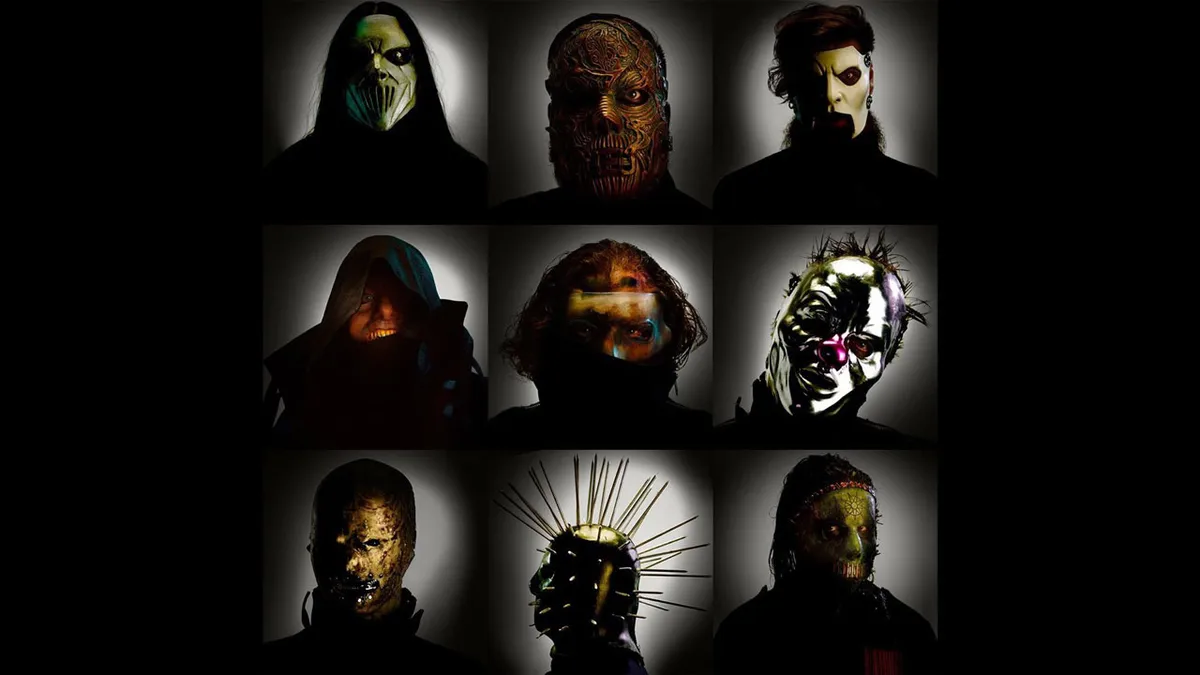
Back in my early teens, my fear had so many triggers. Days passed when I barely spoke for anxiety about rejection or aggression from others. I was never sure where that fear came from, only that it was there in images like Slipknot's masks. Even so, the school rumours of their chaotic early gigs enthralled me like a violent act you find yourself staring at, even as you’re making your getaway. I didn’t know the message in being a Maggot, of rising from suffering, of taking anger and hate and finding salvation. I wasn’t then aware of how it all echoed my repressed transness. All I saw was a sick, seductive brutality that drew me to the heavier stuff, only to be repelled all over again by the rawness.
By my early 20s, the fact that my partner was a long-term metalhead made it hard to escape. He would slowly and carefully introduce me to Trivium, Gojira and Cradle Of Filth. Music where a melody or tender emotion shone through would almost win me over. But try as I might, I never found myself reflected in the sounds and symbols of metal. And when I did, what I saw was a fraud.
Then came COVID-19 and Devin Townsend’s quarantine streams. The music was heavy but light-hearted, poking fun at the precious arrogance of being human. Getting nerdy with home-rigged cameras while his voice sometimes refused to cooperate, this was a man turning up as himself to raise money for urgent causes, playing for hearts that needed a lift.
Seeing him find such modest humour in our shared global hardship made me hopeful in a time that was hard for me emotionally. Isolation gave rise to depression, in part because I didn’t know who I was beyond performing womanhood for social situations. Empath and the Devin Townsend Project albums gave me a comfortable space to feel, to reflect, to peer into the abyss inside and see what stared back.
But it was the journey he shared in his podcasts, of accepting the darker parts of his soul as valid and worthy of artistic expression, which helped me accept my own repressed anger at a world that had stunted my sense of self. The signs of my transness seem obvious in hindsight, now that I'm out to friends and family. But at the time, my not-knowing presented as self-sabotage, sectioning off the parts of myself that were called towards masculinity because I thought they were anomalies. All the while, my true self was trying to surface.
Now I recognise myself as a whole person, I can see metal – especially extreme metal – as the conduit for masculinity I once resisted. But personally, that softer, more feminine shade still needs to be there; an openness to emotionality that’s thankfully present in plenty of heavy bands I’ve discovered.
Take Leprous, whose spirit-dredging songwriting lifted me out of a descending thought spiral that I was alone in my newly identified gender dysphoria. Listening to Aphelion for the first time was a lesson in the opposite, that I am undergoing the universal experience of learning who I am. Einar Solberg’s lyrics translate so well to any dark night of the soul that I saw the reality of my situation, that I’m no different to anyone who’s had the chance at introspection and come out the other side. Yet this needn’t compromise brutality. Cattle Decapitation’s Death Atlas is unquestionably heavy, but easily one of the most emotional extreme metal albums of recent years.
The opposite, however, is just as true. Such ferocious masculinity doesn’t have to come at the cost of my femininity. For my mental wellbeing, the two need to co-exist like the twin guitars of Judas Priest, the two tones present at different levels in different people. I can love metal now because I know myself as a man, but being female-presenting was never the real barrier. Metal is beautiful to me because of the collisions and blurred boundaries between masculine and feminine, aggression and introspection, wherever it falls on the spectrum in between.
So came the rise of Cradle Of Filth’s star on my horizon. Their exultant perversion and reverence for natural beauty brought my past and present selves together in one place. I’ve had a penchant for the gothic since childhood, falling for the tale of Sleepy Hollow and Hans Christian Andersen’s The Little Mermaid. When I first saw the video for Nymphetamine, its memory lingered in the same way those stories first did. Rewatching it now, I see the sapphic moustache-drawing as part of my discovery, like those mini-sexual awakenings in pre-adolescence (looking at you Maleficent). I was always a touch envious of that staged display with a lascivious Dani Filth looking on, as if my subconscious knew everyone present was an aspect of myself.
Finding a healthy pivot point between masculinity and femininity has made Cradle Of Filth one of my most important touchstones. That said, I realise there is a problematic nature to Dani’s numerous white cis-hetero portraits of lady vamps. Taking this awareness into my latest listen through Hammer Of The Witches nonetheless unveils a combination of elements significant to me as a queer man: the gothic romance of Yours Immortally, the eco-conscious tragedy of Deflowering The Maidenhead, the fantasy of righteous vengeance in the title track. Cradle are where I return to find the triumph of delving into darkness, going deep to unearth the real emotion beneath any moment of fury, pride or envy I might be in. Besides, a good dose of camp never hurt anyone.
Speaking of pain relief, when I’m diving into the more harmful emotions I’m still struggling with, there’s no band more cathartic than Slipknot. The fear of those old rumours lingers, but now I’m aware part of that came from fear of myself, I hear that in the lyrics and feel it in the abrasive instrumentation. It’s the sound of dragging yourself through a subterranean steel wool tunnel to scrape off the muck of self-loathing and disgust. Coming to accept this sound has coincided with finding self-acceptance. It’s incredible this band still exists despite tragic losses and infighting, to demonstrate the value of finding comradeship and family through the hurt.
Exploring the full spectrum of my emotions through music has been the best healing balm for my dysphoria. Enslaved provided that when I wasn’t even looking for it. Despite high praise on release, Riitiir is an album I’ve only recently given time to, after witnessing the cathartic journey of Utgard and the stark, expansive beauty of Caravans To The Outer Worlds. The chorus of Thoughts Like Hammers encapsulates the worst I’ve felt in three words – ‘Elucidated, burned, afraid’. Then the following track Death In The Eyes Of Dawn answers that fear with ‘Awake!/The grip of anxiety/Shall strangle the brave no more’.
Finding that an album I passed on can now put words to my journey has been one of the most thrilling steps along the way. But I know from experience that sometimes a piece of art comes to you when you’re ready for it. Metal approached me when I was prepared for the work of looking at my true reflection. Of seeing my anger, betrayal and self-hatred mirrored beside my hopes and desires, where they were all along.
