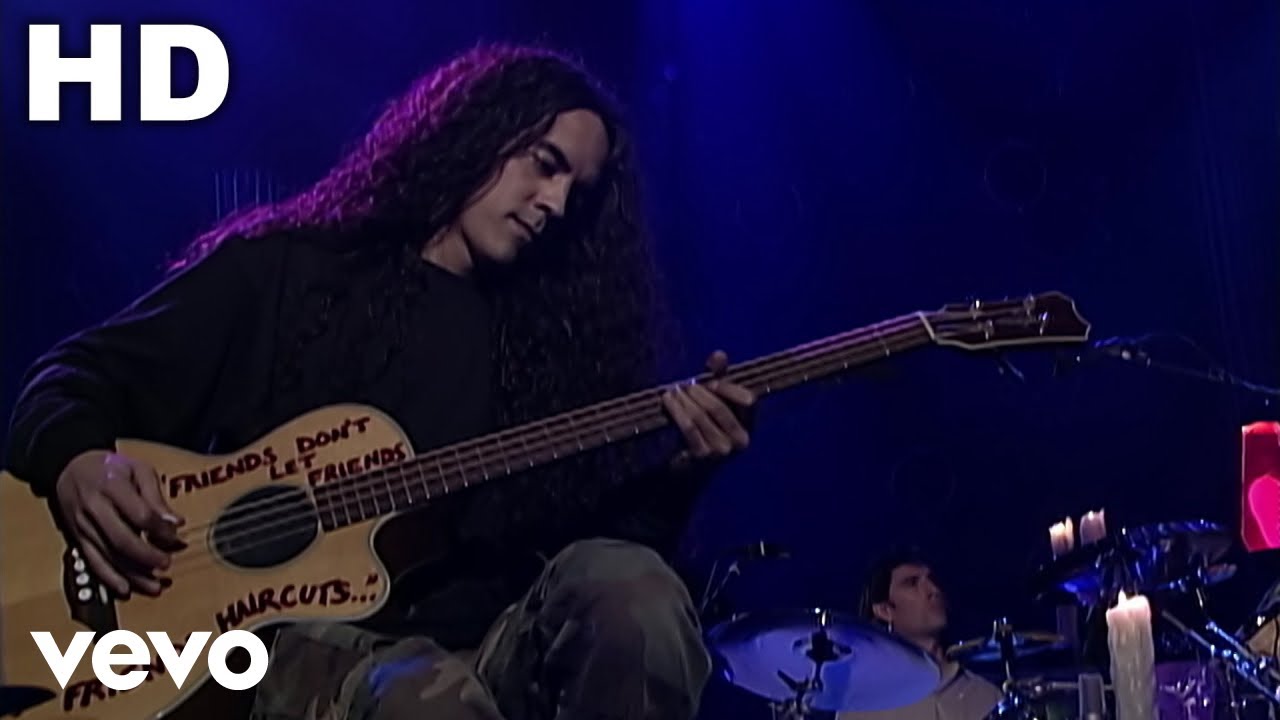


In the mid-90s, the dominance of the alternative rock boom that had kicked off in Seattle at the start of the decade really started to turn sour. Kurt Cobain’s passing in 1994 was the biggest headline maker, but arguably no band had more issues in that era than Alice in Chains; cancelled tours, drug dependency, endless press rumours and inner-band tension all leading to their split.
It’s something of a miracle, then, that in 1996, after years of being begged by MTV, they managed to get back together to perform an Unplugged session that has gone on to achieve legendary status and provide the swansong and final act of the band's classic line up.
As 1996 arrived, it was over two years since Alice in Chains' last live performances on an Australian tour in late 1993. Since then, they had turned down a slot at the huge Woodstock 94 festival and the chance to open for Metallica on their Shit Hits the Sheds US run in the same year, chiefly due to vocalist Layne Stayley’s uncontrollable heroin addiction.
It was a rock-bottom moment; Stayley, having only just returned from rehab, arrived at rehearsal the day before the Metallica tour was due to start, completely strung out. This in turn led drummer Sean Kinney to throw his sticks down and proclaim that he would never play with the frontman again.
If we had kept going, there was a good chance we would have self-destructed
Sean Kinney
"If we had kept going,” Kinney admitted to Rolling Stone in an infamous 1995 profile on the band, "there was a good chance we would have self-destructed on the road, and we definitely didn't want that to happen in public."
Alice in Chains split there and then. The aftermath left certain members angry, but Stayley dumfounded. He admitted he didn’t know what to do, so spent his time getting drunk and lazing on his couch watching TV. His reclusiveness inspired the tabloid rumour mill to whirl out of control; at various times the press pronounced he was dead, had developed gangrene and even contracted HIV.
"I found out through the Internet that I have AIDS," Staley told Rolling Stone. "I learned I was dead."

The members of Alice in Chains eventually found things to do; bassist Mike Inez played on Slash’s solo album It’s Five O’ Clock Somewhere, Stayley formed the grunge supergroup Mad Season alongside Pearl Jam’s Mike McCready and Screaming Trees drummer Barrett Martin, releasing the fantastic Above album in 1995, and guitarist Jerry Cantrell mapped out a solo career.
Time away from each other gave the band perspective. Stayley later admitted he felt that by starting these new projects, the members were “betraying” each other. So, after six months apart and with the promise of total creative freedom and an unlimited budget from their label, Alice in Chains reconvened and began working on a new album.
1995’s Alice in Chains was released on October 31 1995, entering the US Billboard Chart at number 1 and selling over two million copies in their homeland. It was good news but presented a problem: most artists with a number one album in their pocket would go out and promote it, but the members of Alice in Chains, particularly Stayley, were still in no fit state to operate as functioning, touring band.

Throughout this period, MTV producer Alex Colletti had been trying desperately to convince the band to perform one of his channels' Unplugged sessions.
“They have the songs, they have the depth, they have the emotion where, when you strip it down, you really find something there,” he said in the 2015 biography Alice in Chains: The Untold Story. “Layne’s voice and those songs were going to shine through.”
AIC had turned the offer down on multiple occasions, mainly due to Cantrell’s concerns that transposing their songs acoustically in front of an audience wouldn’t work. But now, with no other way to promote their new album, they finally agreed to take part.
The Majestic Theater in Brooklyn was booked for April 10 1996, with rehearsals in Seattle prior to the show, but old habits die hard. Kinney bemoaned that there was “Barely any rehearsing at all, guys not showing up - the same shit” in the 2009 book Grunge is Dead, and rumours continued to surround Stayley’s habits.
Barely any rehearsing at all, guys not showing up - the same shit
Sean Kinney
On the day of the show, 400 fans were ushered into the Majestic Theater, with thousands left frustrated outside, to see Alice in Chains' first live performance in two and a half years.
The venue had been given a grimy makeover to suit the bands aesthetic, with paint splatters peeling from the walls, gunshot holes fired into the backdrop and the stage decorated by candles purchased in Seattle by Stayley himself. The vibe was completed with minimalist lighting in pink and purple, matching the frontman’s recently dyed hair.
No one really knew if it was going to work, and, with Stayley ill from heroin withdrawals having to give himself a shot to perk up prior to performing and Cantrell getting food poisoning from a rogue hotdog and vomiting all afternoon, leading to an insurance bucket being placed next to him onstage, the smart money would have been on a rusty, unprepared Alice in Chains Unplugged being a car crash.
Miraculously, they found pure magic, a thirteen-song set that is equal parts stirring, inspiring, beautiful and deeply sad. Cantrell’s reworkings of classic material like Would, Rooster, Down in a Hole and No Excuses sound even darker in their quieter, more sombre forms, whilst Kinney, Inez and live guitarist Scott Olsen do fantastic jobs of bringing colour and nuance to songs the band feared would sound naked when not cranked up to 11.

The reason this performance remains so special, though, is Stayley. Despite his shocking appearance - gaunt, frail, pale, almost motionless as he sits on a stool with his eyes closed - he is effortlessly able to unleash a voice with such power it hits like a gorilla dropping a concrete breeze-block onto your stomach.
The one occasion that he does eyeball the camera, delivering the line 'Oh god please, won’t you help me make it through' on Rooster, is truly, heartbreaking and chilling to witness. You’ll struggle to find another performance so gripping in live music history.
Alice in Chains Unplugged was released as an album and concert film on July 30 1996. By that point, the band had played their final shows with Layne Stayley, appearing on The Late Show with David Letterman and four gigs opening for the reformed Kiss. The day after their last performance, in Kansas on July 3, Stayley overdosed and was taken to hospital, leading to a hiatus that that incarnation of the band would never come back from.
It meant that although the Unplugged show was not his last performance, it was undoubtedly the final defining moment of the Layne Stayley era of Alice in Chains. Within six years he would pass away, leaving this as his swansong.