


By the late 90s, the chances of a Blondie reunion were almost zero. New York’s premier new wave hitmakers had split in 1982, dipping from view after their poorly received sixth album The Hunter, and everyone had gone their separate ways. But a chance meeting with a local industry figure stirred something in guitarist and co-founder Chris Stein.
“Blondie had always been in the back of my mind, like a splinter,” says Stein. “Then I met this guy, Harry Sandler, who hooked us up to a manager. He said: ‘Look, if you don’t do this now, you may never do it.’ So that kind of stuck with me.”
“Harry was a terrific guy,” adds singer Debbie Harry. “He really had no vested interest in us doing anything. It wasn’t like a real push-push-push kind of thing. I was touring behind all of my solo things that Chris had participated in very heavily, and everywhere I went people were saying: ‘Why don’t you call it Blondie?’ So it was always in my face.”
Stein and Harry called on Clem Burke (drums), Jimmy Destri (keyboards) and Gary Valentine (bass), reassembling the classic line-up that had made Blondie’s 1976 debut album. The quintet duly got back together for three US festival shows in 1997. What they needed now was some new music. The creative juices soon began to run, not least for Destri, who reached back into memories of his youth for Maria, the song that would spearhead Blondie’s return.
“It began as a sort of shuffle on guitar,” Destri explains. “I’m not a guitar player at all, but I just started pumping an ‘A’ chord in a rockabilly beat, over and over. Then I changed a few chords around, came up with a lyric and copied it into my little tape machine. I had the whole idea for the song fleshed out in fifteen minutes.”
Maria wasn’t titled after anyone specific. Destri instead used the name to embody his teenage fantasies about meeting the perfect girl when he was a student at catholic school.
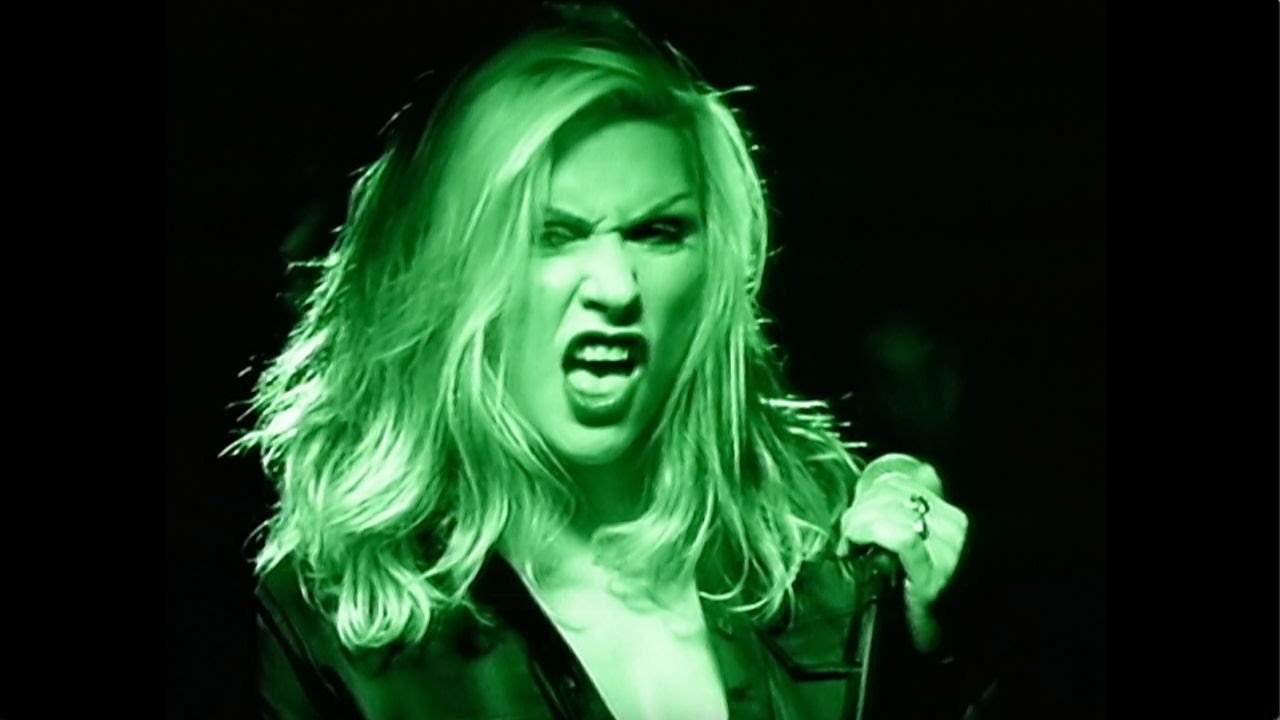
“It was the usual stuff – sexual repression causing incredible desire among a school full of boys,” he says. “So I wanted to write about that, and ‘Maria’ sounded phonetically very pretty. Growing up, there were girls in my neighbourhood who I always had crushes on, but I was very small when I was young, so they treated me like a pet rather than a prospective beau. Girls thought I was cute, but not in the way I would’ve liked.”
Opening with: ‘She moves like she don’t care, smooth as silk, cool as air’, he sketched a lyrical portrait in which the protagonist is driven insane by unrequited lust, his heart hammering like a New York subway train.
“I really pride myself on lyric writing,” says Destri, whose other Blondie credits include Picture This and Atomic. “My dad was an advertising copywriter on Madison Avenue. He told me that his job was to explain things very quickly, but make it stand out. I remember he did an ad for Canon cameras: ‘Make light work for people.’ It taught me a lesson about capturing a lot of things in one line. Maria is very pop-sensible and gets the point across.”
Destri presented the demo to the rest of Blondie, recently trimmed to a four-piece after Valentine’s sudden departure. In keeping with the band’s back-to-the-roots approach, first-album producer Craig Leon was enlisted to help shape the track in the studio.
“We had to work on the arrangement a bit, but it was almost there,” Harry recalls. “I think [auxiliary member] Paul Carbonara added a lot to it.”
Stein: “We’d just gotten Paul, this great guitar player. He does all the eighth and sixteenth notes. I remember him saying that was a factor of the Blondie sound. As we were recording, I thought there was a really good chance of people liking Maria.”
“Paul played a great pumping acoustic guitar throughout, and Chris put this beautiful country line in the chorus,” says Destri. “It really fleshes out the song. Clem put on the descending intro lines, which I think he stole from [The Only Ones’] Another Girl, Another Planet. When he came up with that, I went: ‘Right!’ And of course Debbie’s singing is so much better than my demo attempt.”

Surfing a wave of pop-punk energy, Harry’s vocal alternates between cool self-possession and sudden euphoria as she banks into the chorus: ‘Maria, you’ve gotta see her!’ Everyone in the band smelled a hit, with the exception of the song’s creator. That is, until Destri heard the final cut. “After we were done, and Debbie had sung it, I thought: ‘Yeah, they’re right. That’s the one!’”
Sure enough, Maria was a massive hit when released in January 1999. It became Blondie’s sixth No.1 single in the UK – their first since 1980’s The Tide Is High - and landed on the 20th anniversary of their first chart-topper, Heart Of Glass. It proved an ideal primer for parent album, No Exit (released in mid-February), which soon went gold. There were no two ways about it, Blondie were back. Maria was a runaway success across the rest of Europe too. Sales in Spain were particularly strong.
“It was really big over there because there are many Spanish girls named Maria,” notes Stein. The only place where the single flopped was on Blondie’s home turf. It stalled at No.82.
“I think we were at a bit of a crossroads between the European and US. markets,” reckons Harry. “It always seemed to be something like that for us. Spiritually, Maria probably didn’t really fit into a certain genre so much. We were more pop, while the U.S. was more rock at the time. That was usually what was happening to Blondie.”
Destri believes Maria’s Stateside failure was due partly to circumstance. Having toured Europe extensively in the build-up to its release, the band were too exhausted to fully repeat the process back home. “We sort of missed the boat,” he concludes. “And the American charts are really hard to pop. But I’ll definitely take being number one in fourteen countries with that song!”
No Exit (Expanded and Remastered) is out now.

