
Greatest Albums Of The 70s: #1
POWERAGE – AC/DC (Atlantic, 1978)
Select the newsletters you’d like to receive. Then, add your email to sign up.
You are now subscribed
Your newsletter sign-up was successful
Want to add more newsletters?
Every Friday
Louder
Louder’s weekly newsletter is jam-packed with the team’s personal highlights from the last seven days, including features, breaking news, reviews and tons of juicy exclusives from the world of alternative music.
Every Friday
Classic Rock
The Classic Rock newsletter is an essential read for the discerning rock fan. Every week we bring you the news, reviews and the very best features and interviews from our extensive archive. Written by rock fans for rock fans.
Every Friday
Metal Hammer
For the last four decades Metal Hammer has been the world’s greatest metal magazine. Created by metalheads for metalheads, ‘Hammer takes you behind the scenes, closer to the action, and nearer to the bands that you love the most.
Every Friday
Prog
The Prog newsletter brings you the very best of Prog Magazine and our website, every Friday. We'll deliver you the very latest news from the Prog universe, informative features and archive material from Prog’s impressive vault.
Presenting our no.1 Greatest Album Of The 70s, the connoisseur’s choice!
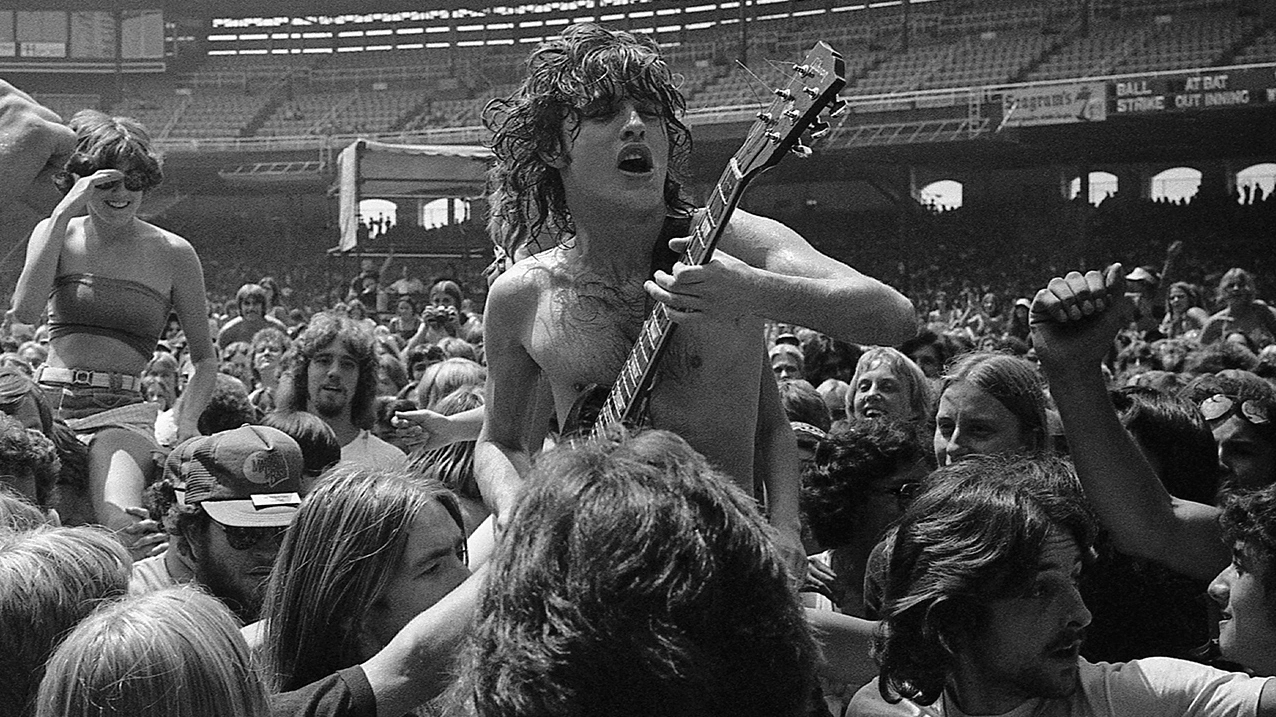
Sandwiched between the twin peaks of Let There Be Rock and Highway To Hell, AC/DC’s fourth international release didn’t immediately stake a claim as the finest album in the band’s catalogue. That Powerage is the only AC/DC album title not to feature in a chorus speaks of one of its key virtues – subtlety. Granted, there’s little that’s subtle about the throttling riffs on Riff Raff or the crunching Kicked In The Teeth, but elsewhere – on the beautifully lachrymose Down Payment Blues, the playful What’s Next To The Moon, the plaintive, in-the-pocket Gone Shootin’ – ’DC display a discipline, control and restrained power that only the most mature and confident of players can attain. Which helps explain why this is Keith Richards’s favourite AC/DC album.
Emphatically, though, this is Bon Scott’s album. Much of the beauty of Powerage comes from Scott’s brilliantly sketched portraits of disappointed, desperate men pushed beyond breaking point by lost love and empty pockets. As cocksure as he could be – and no other singer before or since swaggered with such Jack The Lad insouciance – Scott always had an affinity for the broken and bruised; that guy with holes in his shoes, holes in his teeth and patches on the patches on his old blue jeans, and Powerage is a celebration of fortitude in the face of soul-crushing setbacks. Crucially, though, there is always hope here, always a glimpse of blue skies for those knocked in the gutter, as evinced by Sin City at the heart of the album, a glorious ‘fuck you’ to the fates, a defiant last hurrah in the face of cruelly stacked odds. After Powerage, AC/DC would get louder, slicker and bigger, but they would never again display this much heart, soul and humanity.
What they said at the time: “Powerage shows AC/DC to have evolved… to full-blown competence.” Circus
Sign up below to get the latest from Classic Rock, plus exclusive special offers, direct to your inbox!

A music writer since 1993, formerly Editor of Kerrang! and Planet Rock magazine (RIP), Paul Brannigan is a Contributing Editor to Louder. Having previously written books on Lemmy, Dave Grohl (the Sunday Times best-seller This Is A Call) and Metallica (Birth School Metallica Death, co-authored with Ian Winwood), his Eddie Van Halen biography (Eruption in the UK, Unchained in the US) emerged in 2021. He has written for Rolling Stone, Mojo and Q, hung out with Fugazi at Dischord House, flown on Ozzy Osbourne's private jet, played Angus Young's Gibson SG, and interviewed everyone from Aerosmith and Beastie Boys to Young Gods and ZZ Top. Born in the North of Ireland, Brannigan lives in North London and supports The Arsenal.
