


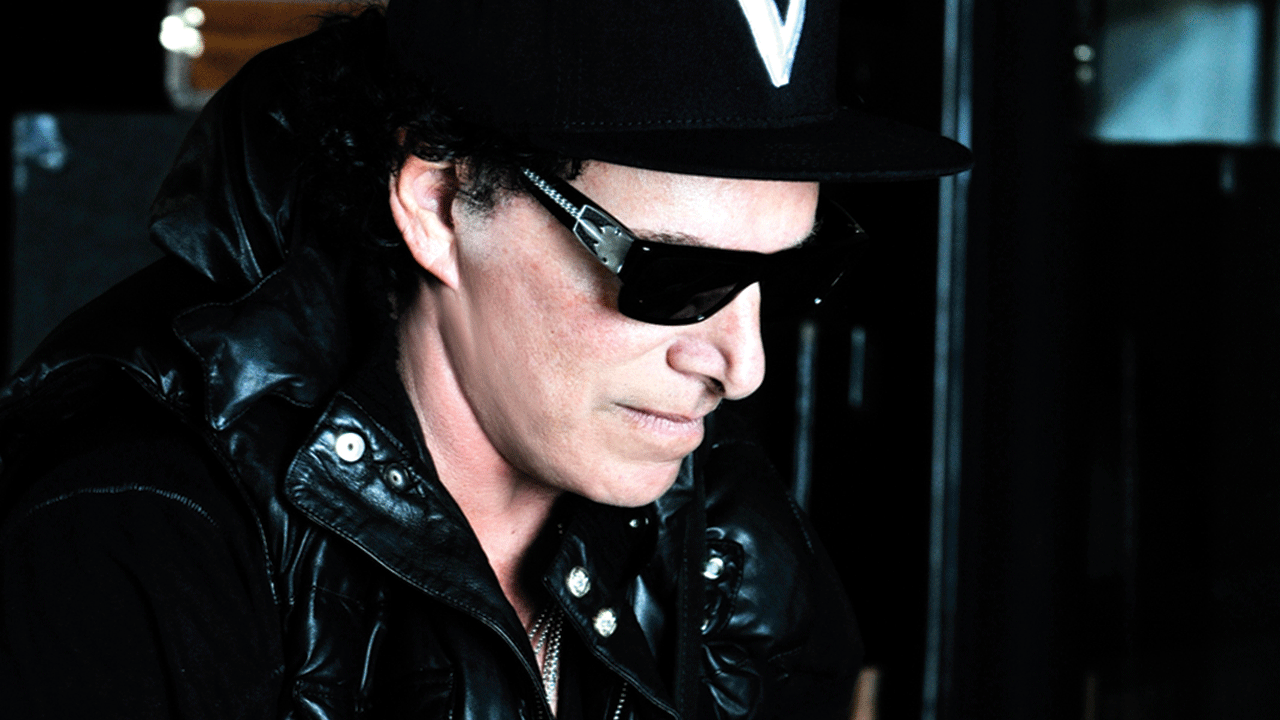
Best known as the mainstay and founder member of jazz-rock fusioneers turned AOR arena rockers Journey, Neal Schon has collaborated on enough different projects to make the average in-demand session musician feel underemployed. His latest solo album Vortex reunites him with Journey bandmate Steve Smith and keyboard genius Jan Hammer on an instrumental album that touches bases from jazz to classical to world music. Yet for Schon, it all comes back to the blues.
Who were the first blues artists that really moved you?
The first blues I listened to was BB King. I started listening when I was about 11, by which time I had already been playing for about a year. Then it was Albert King, and I was a big fan of Mike Bloomfield and his work with the Paul Butterfield Blues Band and Electric Flag. Then I dug into Howlin’ Wolf, Muddy Waters, Junior Wells – all those cats. Freddie King, Buddy Guy… I found my way round the guitar by listening to them, then got into everything from the UK – Eric Clapton, John Mayall and later Cream./o:p
What was it like growing up in San Francisco in the late 60s?
Oh man, it was really wild. I got to attend a lot of concerts at the old Fillmore West on Market Street. I saw everyone there! At 12 or 13 I saw Aretha Franklin so many times, and she just killed me. I would listen to her voice and try to imitate it with my guitar – I’d try to copy the turns and the vibrato and her phrasing. So unbelievably soulful.
You were only 15 when you joined Santana…
I would hang out at Wally Heider’s studio in San Francisco when they were finishing up Abraxas, their second album. Their crew took me under their wing, and everyone was just diggin’ me being around for some reason. They set me up in a room with a Fender Twin and I turned some of the ’verb up and put a pillow in the back, and just let it wail. They loved how attached I was to my guitar and they could tell it was going to be my main form of expression. Eventually they asked me to join the band to play on Santana III, which was mind-blowing for me./o:p
Did you play with any of your other heroes?
I was in the studio at Wally Heider’s jamming with Santana, not even in the band yet, and in walked Eric Clapton one day. My mouth just about hit the ground. He sat down and started playing. We jammed for about two hours and he said, ‘I’ve really got to get back to the hotel cos I’m playing tomorrow at the Berkeley Community Theatre.’ He walked out and I was just kinda mind-fucked – that’s crazy that I’m in the studio with Santana recording and then Eric Clapton comes in and I’m jamming with him!
So the next day I come into Wally Heider’s and there’s a note left at the front desk for me from Eric, inviting me to come and play with him that night. I didn’t have a car so I had to talk someone into driving me over there, and I got there about 10 minutes before they went on stage.
I had an amazing night on stage, one of the highlights of my life, and then he asked me to go back to the hotel with him to jam some more. Then this guy Herbie Herbert, who was Santana’s roadie but later became their manager and mine, grabbed me and put me up against the wall. He said, ‘Listen man, you can’t go with Clapton, the band [Santana] is going to ask you to join them tomorrow!’ And I go, ‘Relax Herbie, I’m not about to do anything and I doubt he’s gonna ask me.’ But then I went to Clapton’s room and he asked me to join the band and move to London.
Wow! If I could have split myself in half I would have done both but I had to make a choice. In the end, I got the feeling with The Dominoes, just meeting the guys backstage for 10 minutes, that there were a lot of problems going on with drugs. I made my choice based on that. To this day, though, I wish I could have done both./o:p
What inspired you to move into more progressive styles when Journey formed?
I always loved Cream. Along with Jeff Beck and Hendrix, they took things further beyond the blues, and I loved how inventive these players were. I also loved John McLaughlin, and I was listening to Chick Corea and Miles Davis. After Santana split up I’d played with Greg Errico and Larry Graham from Sly And The Family Stone, playing funk-rock stuff. So I was playing different kinds of music when Herbie approached me to form a band around myself, which would end up being Journey. I wanted it to be a progressive rock unit like Mahavishnu [Orchestra], but we were more like a rock fusion band.
And now you’re back with an instrumental record.
It’s my homage to everything I’ve ever liked. It’s also coming from a very organic and real place. It wasn’t preconceived, not planned out, the minimum of overdubs. I wrote it to play live because that’s what I have always loved doing, and still do./o:p
Vortex is out on June 22 via Music Theories./o:p

