





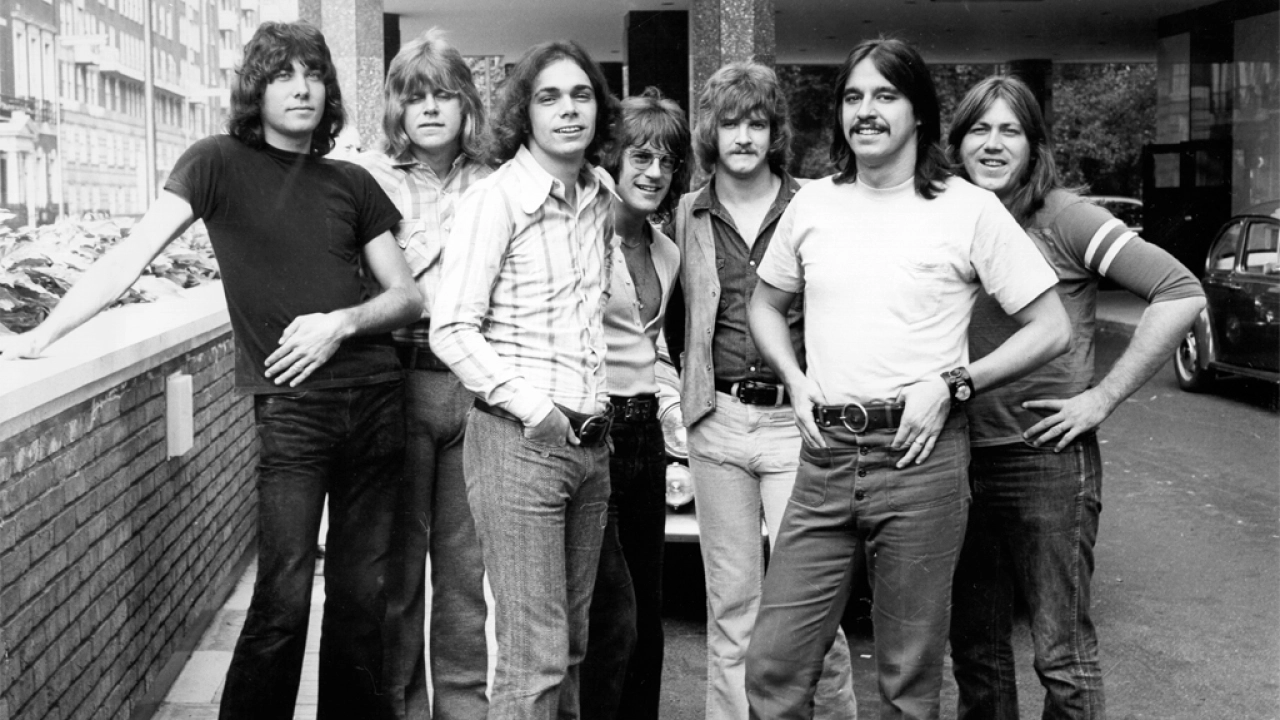
When the band formed in 1967, how big were you dreaming? Walter Parazaider (saxophone): We sat around my kitchen table on February fifteenth of 1967 and said: “Let’s make a band that’s the best in the world.” My idea was to make horns an integral part of a rock band. In that sense, we blazed the trail. We had lofty ideas and hopes. We were young and ignorant.
And Jimi Hendrix was a fan.
It’s true. We played at the Whisky A Go Go in Los Angeles in 1968 and afterwards there was a tap on my shoulder. Jimi Hendrix looked me straight in the eye and said: “The horns are one set of lungs. And your guitar player is better than I am.” Jimi wanted to make a record with us – the horn section. Sadly, it never happened.
Your first three albums were all doubles. How the hell did you persuade your record company to let you do that?
They didn’t like the idea. But to make it more palatable, we cut our royalties on those albums because we believed in the music so much.
The band’s first hit single had a mysterious title: 25 Or 6 To 4.
A lot of people thought it was about drugs. In fact it’s a song about writing a song. When Robert [Lamm, singer and keyboard player] was trying to finish it, he looked at the clock and it was twenty-five or twenty-six to four.
Your 1970 album Chicago II was dedicated to “the people of the revolution”. Did you consider yourselves to be part of the counterculture?
Our songs reflected the time and the unrest in society over the war in Vietnam. But we also felt that when people came to our shows, they needed to escape from all the troubles in the world. We coined a phrase: we’re in the happiness business.
The absolute low point of the band’s career was undoubtedly when guitarist Terry Kath died in 1978 from an accidental selfinflicted gunshot. How did you cope on a personal level?
Terry and I were teenage friends and it was devastating for me. When I heard the news on the phone, I almost went to my knees. It was like being hit with a sledgehammer. We thought, “Maybe this is the way the band should end.” We had fan mail saying: “Please, don’t stop the band now.” That really helped us. But I have to be honest – there are some things you never get over.
Across the years, you’ve had many hits with soft-rock ballads. Has that, ultimately, damaged the band’s credibility?
Well, I don’t think we get the respect we should. Maybe that’s the mother hen in me. But when I think about it, what do I want? Selling over a hundred million records is amazing.

